

Two PhD research positions in MultiMAM
University of Ljubljana · Faculty of Mechanical Engineering · MSCA Doctoral Network (Grant Agreement 101309938)
About MultiMAM
MultiMAM (A Doctoral Network on Multimaterial Additive Manufacturing; Grant Agreement 101309938) is a Horizon Europe Marie Skłodowska-Curie Actions Doctoral Network. It brings together universities, research institutes and industrial partners across 10 European countries, training 15 doctoral candidates to address material, process and sustainability challenges in multimaterial additive manufacturing. Both positions are based at the University of Ljubljana, Faculty of Mechanical Engineering, and include interdisciplinary training, one academic and one industrial secondment, and the MultiMAM network-wide training events.
DC13 — DED-Arc (WAAM) process monitoring and control based on vision systems
Hosting laboratory: Laboratory for Mechatronics, Production Systems and Automation (LAMPA)
DC13 aims to develop vision-based monitoring and closed-loop control of wire-arc directed energy deposition (DED-Arc, also known as WAAM) for robust multi-material part production. DED-Arc builds large metal parts layer by layer by melting wire feedstock with an electric arc, offering high deposition rates and low material and equipment costs. However, the process is sensitive to heat accumulation, which causes variations in melt pool size, bead geometry and material properties, particularly at transitions between materials in multi-material builds. The project will develop machine vision systems that measure the melt pool shape and temperature in real time and use these measurements for closed-loop control of the welding parameters and the robot motion path. The aim is to keep the deposited geometry constant, reuse the accumulated heat to shorten build time, and ensure stable transitions between materials.
Research responsibilities
- Develop a vision system for real-time measurement of melt pool shape and temperature.
- Segment melt pool images and extract process features for in-situ monitoring.
- Develop closed-loop control strategies for heat input, layer height and robot motion path.
- Validate the results on multi-material demonstrators, including parts made from recycled feedstock, together with the industrial partner NUMIP and supported by microstructural analysis at DTU.
Expected results
- A vision-based monitoring and closed-loop control system that maintains constant bead geometry and stable material transitions without manual intervention.
- New process knowledge linking melt pool behavior to the geometry and microstructure of multi-material DED-Arc parts, together with industrially relevant demonstrators.
Qualifications
You have a background in mechanical, materials, mechatronic or electrical engineering, physics or a related field. Preferably, you also have programming (Python, C/C++) and experimental skills, and basic knowledge of machine vision and additive manufacturing. Previous research experience in additive manufacturing, welding, machine vision, image processing, machine learning or control engineering is an advantage but is not mandatory.
Supervision
- Prof. Drago Bračun (University of Ljubljana, Faculty of Mechanical Engineering) will be the principal supervisor. His research covers machine vision and image processing for manufacturing processes, with a focus on directed energy deposition. You will also be co-supervised by:
- Prof. Damjan Klobčar (University of Ljubljana, Faculty of Mechanical Engineering) – local co-supervisor. Professor in the field of welding and additive manufacturing, with expertise in DED processes and weldability.
- Prof. Dorte Juul Jensen (Technical University of Denmark, DTU) – academic co-supervisor and host of the academic secondment. Professor in materials science, with expertise in microstructural analysis and non-destructive X-ray characterisation of metals.
- Dr. Matej Pleterski (NUMIP d.o.o.) – industrial co-supervisor and host of the industrial secondment. Technical head of NUMIP, an engineering, construction, maintenance and production company active in the nuclear sector.
Planned secondments
- Industrial secondment: NUMIP d.o.o., Slovenia (Dr. Matej Pleterski), project months 18–22 – optimisation of DED-Arc parameters for recycled multi-material parts.
- Academic secondment: Technical University of Denmark (DTU), Denmark (Prof. Dorte Juul Jensen), project months 32–34 – microstructural analysis of DED-Arc parts by non-destructive X-ray methods.
Scientific contact: MultiMAM@fs.uni-lj.si
DC14 — In-situ vibrations and alloying in DED-Arc of recycled multimaterials
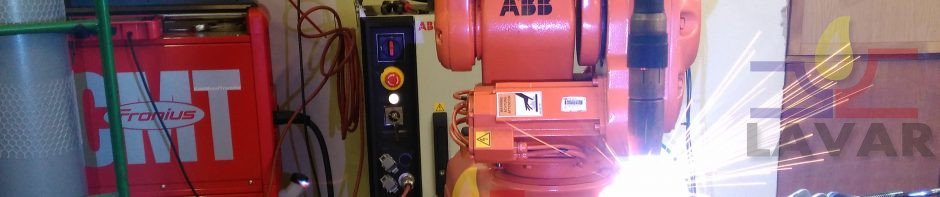
Hosting laboratory: Laboratory for Welding (LAVAR)
DED-Arc (also known as wire arc additive manufacturing, WAAM) allows high-rate production and repair of metal components using wire feedstock, including recycled materials. Repeated thermal cycling can produce coarse or elongated grains, heterogeneous microstructures, residual stresses and anisotropic properties. Although mechanical agitation and vibration-assisted processing have shown potential, the combined effects of vibration frequency, amplitude and direction remain insufficiently understood. DC14 will develop and experimentally validate a system for controlled in-situ vibration during DED-Arc and will investigate in-situ alloying using two wires to adjust chemical composition and enable multimaterial or functionally graded deposits.
Research responsibilities
- Design, integrate and validate a controllable in-situ vibration system for DED-Arc; characterise its frequency, amplitude and vibration direction.
- Plan and execute systematic experimental studies linking vibration parameters and deposition conditions with grain nucleation/refinement, porosity, residual stress and material anisotropy.
- Investigate two-wire in-situ alloying, composition control and potential functional grading using multimaterial and, where feasible, recycled wire feedstocks.
- Characterise deposited materials by metallography and other suitable microstructural methods; assess mechanical behaviour (including static and/or dynamic response), and/or corrosion performance where relevant.
- Analyse the links between thermal history, vibration, microstructure and properties, and evaluate implications for process stability, energy use and material efficiency.
- Collaborate with other MultiMAM doctoral candidates (particularly DC13), contribute to work packages 4, 5 and 8, publish scientific results, participate in project training and complete planned secondments.
Expected results
- A tested in-situ vibration approach for DED-Arc, with experimentally established effects of frequency, amplitude and direction on microstructure and residual stress.
- Quantified relationships between processing conditions, grain structure, porosity, anisotropy, mechanical properties and, where evaluated, corrosion behaviour.
- An assessment of dual-wire in-situ alloying for recycled multimaterial and/or functionally graded deposits, including implications for process sustainability.
Qualifications
A master’s degree (or equivalent) in mechanical engineering, materials engineering, metallurgy, mechatronics or electrical engineering, physics or a closely related field is required before the start of employment. Familiarity with welding or additive manufacturing, metallurgy, mechanical testing, experimental design, vibration systems, measurement and data analysis is advantageous, but prior research experience is not mandatory. Candidates should be motivated to undertake laboratory research, collaborate in an international team, and communicate scientific findings effectively in English.
Supervision
- Principal supervisor: Prof. Damjan Klobčar (University of Ljubljana, Faculty of Mechanical Engineering), whose research covers welding, weldability, metallurgy and directed energy deposition. The DC14 doctoral researcher will collaborate closely with DC13 on DED-Arc process monitoring and control.
- Prof. Drago Bračun (University of Ljubljana, Faculty of Mechanical Engineering) – local co-supervisor. His research covers machine vision and image processing for manufacturing processes.
- Dr.-Ing. Ines Kuehnert (Leibniz Institute of Polymer Research Dresden, IPF) – academic co-supervisor and host of the academic secondment. Her expertise includes polymer processing, injection moulding and additive manufacturing.
- Matej Balažic (BALMAR d.o.o.) – industrial co-supervisor and host of the industrial secondment. CEO and Head of R&D.
Planned secondments
- Industrial secondment: BALMAR d.o.o., Slovenia (Matej Balažic), project months M20–M24 — closed-loop WAAM control based on visual feedback.
- Academic secondment: Leibniz Institute of Polymer Research Dresden (IPF), Germany (Dr Kuehnert), project months M34–M36 — sustainability analysis of the DED-Arc (WAAM) process.
Scientific contact: MultiMAM@fs.uni-lj.si
Eligibility and doctoral enrolment
- A relevant master’s degree (or equivalent) must be awarded before employment starts. Applications may be submitted before graduation.
- Applicants must not hold a doctoral degree at the recruitment date; researchers who have already successfully defended a doctoral thesis are not eligible even if the diploma has not yet been issued.
- Under the MSCA mobility rule, applicants must not have resided or carried out their main activity (work, studies, etc.) in Slovenia for more than 12 months during the 36 months immediately before recruitment. Compulsory national service, short visits such as holidays and time spent during a refugee-status application procedure under the Geneva Convention are excluded.
- Candidates of all nationalities may apply. Good written and spoken English is required; prior directly relevant research experience is an advantage, not a prerequisite.
The selected candidates must fulfil the admission requirements and enrol in the Doctoral Programme in Mechanical Engineering at the University of Ljubljana. The standard programme is four years (240 ECTS), while the project-based organisation of research within MultiMAM is intended to enable completion within three years, subject to fulfilment of all academic and research requirements, including the doctoral defence.
Doctoral programme information: https://www.fs.uni-lj.si/en/study/3rd-cycle-doctoral-study-programme/doctoral-programme-in-mechanical-engineering/program-information/
What we offer
The positions are full-time (40 hours/week) for 36 months, with an envisaged start between 1 July and 1 October 2027 and a three-month probation period. The successful candidates will receive a financial package in accordance with MSCA Doctoral Network rules and Slovenian law, comprising a living allowance (subject to the applicable country correction coefficient), a mobility allowance and, where eligible, a family allowance. These contributions fund employment costs and are subject to employer/employee taxes and social-security contributions under Slovenian law; they are not net take-home salary. Employment includes paid leave and social-security coverage. Conference participation and publication of research results will be supported.
Selection and assessment
Recruitment will be open, transparent and merit-based. Applications will be shortlisted based on academic preparation, relevant skills, research potential and alignment with the selected doctoral project(s). Shortlisted applicants will be invited to an online interview, including a brief presentation, and assessed on scientific and transferable skills.
How to apply — common procedure for DC13 and DC14
Email: MultiMAM@fs.uni-lj.si
Video: MP4 attachment or link to cloud storage
Email your application to MultiMAM@fs.uni-lj.si by 5 February 2027, 23:59 CET (Ljubljana time). Use the subject line “Surname Firstname MultiMAM_1DCxx 2DCyy”, substituting the project numbers for your first and second preferences (for example, 1DC13 2DC14). If you apply for only one position, indicate only your first choice. You may select a maximum of two doctoral projects; list your preferences in the application form.
Submit single application PDF in English (under 10 MB) containing all required documents. In addition, submit also a motivational video in English (maximum 60 seconds). The video may be submitted either as a separate MP4 email attachment (maximum 10 MB) or by including a direct cloud-storage viewing link in your application PDF (in the motivation letter). When attaching the video, use a filename consistent with the email subject.
Include these documents in single PDF (under 10 MB)
- A completed and signed MultiMAM PhD position application form.
- A motivation letter (cover letter) explaining why you are interested in DC13 and/or DC14, your relevant background and your motivation to join MultiMAM.
- A curriculum vitae (CV).
- BSc/MSc diploma certificates and transcripts, in English or with English translations, including an official grading-scale description.
- Documentation of English-language proficiency.
- Contact details for two referees; recommendation letters may also be included.
- Relevant publications, thesis work, project reports or other supporting documents, if available. Concise descriptions and working links may be used for large supporting files.
Application form: Download the MultiMAM PhD position application form below.
Download application form (.docx)
One-minute motivational video — MP4 attachment or cloud link (max. 10 MB)
Prepare a motivational video in English (maximum 60 seconds), briefly introducing yourself, explaining your interest in the selected project(s), and highlighting relevant skills or experience. A smartphone or webcam is sufficient; professional production is not required. Use MP4 (H.264 video with AAC audio), preferably at 720p or 1080p, with a maximum file size of 10 MB. Either attach the MP4 to the application email or upload it to Google Drive, OneDrive or a similar service and include its direct viewing link in your application PDF (motivation letter). Cloud links must allow anyone with the link to view the video without signing in, passwords or permission requests. Test the link in a private/incognito browser and keep it accessible through recruitment and selection. Do not embed the video in the PDF.
Privacy and further information
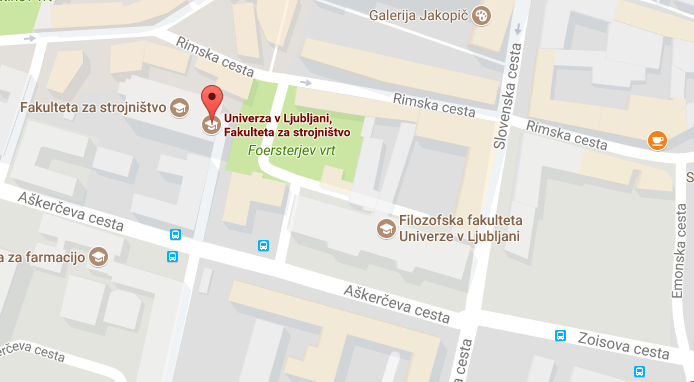
The University of Ljubljana, Faculty of Mechanical Engineering, Aškerčeva cesta 6, 1000 Ljubljana, Slovenia, is the controller of personal data supplied in applications. Data will be processed for recruitment, selection and MSCA audit requirements, and may be shared only with relevant MultiMAM consortium members involved in the selection of the chosen projects. Application data will be retained through the selection process and for three years afterwards, or longer where required for MSCA audits, in accordance with applicable data-protection rules.
MultiMAM project: https://cordis.europa.eu/project/id/101309938
Faculty of Mechanical Engineering: https://www.fs.uni-lj.si/ · Application email: MultiMAM@fs.uni-lj.si
 fs.uni-lj.si